
If you’re considering windshield protection film, one of the first questions you probably have — right after “does it actually work?” — is “how do I make it last?” or “how do I take care of windshield protection film?” Fair questions. The truth is, getting the most out of your WPF doesn’t require a complicated routine, but it does require knowing what helps, what doesn’t, and what can actually shorten the life of the film. We’re here to give you the real facts on how to keep your windshield protection performing at its best, regardless how you use your vehicle.
What to Expect with ExoShield Windshield Protection Film
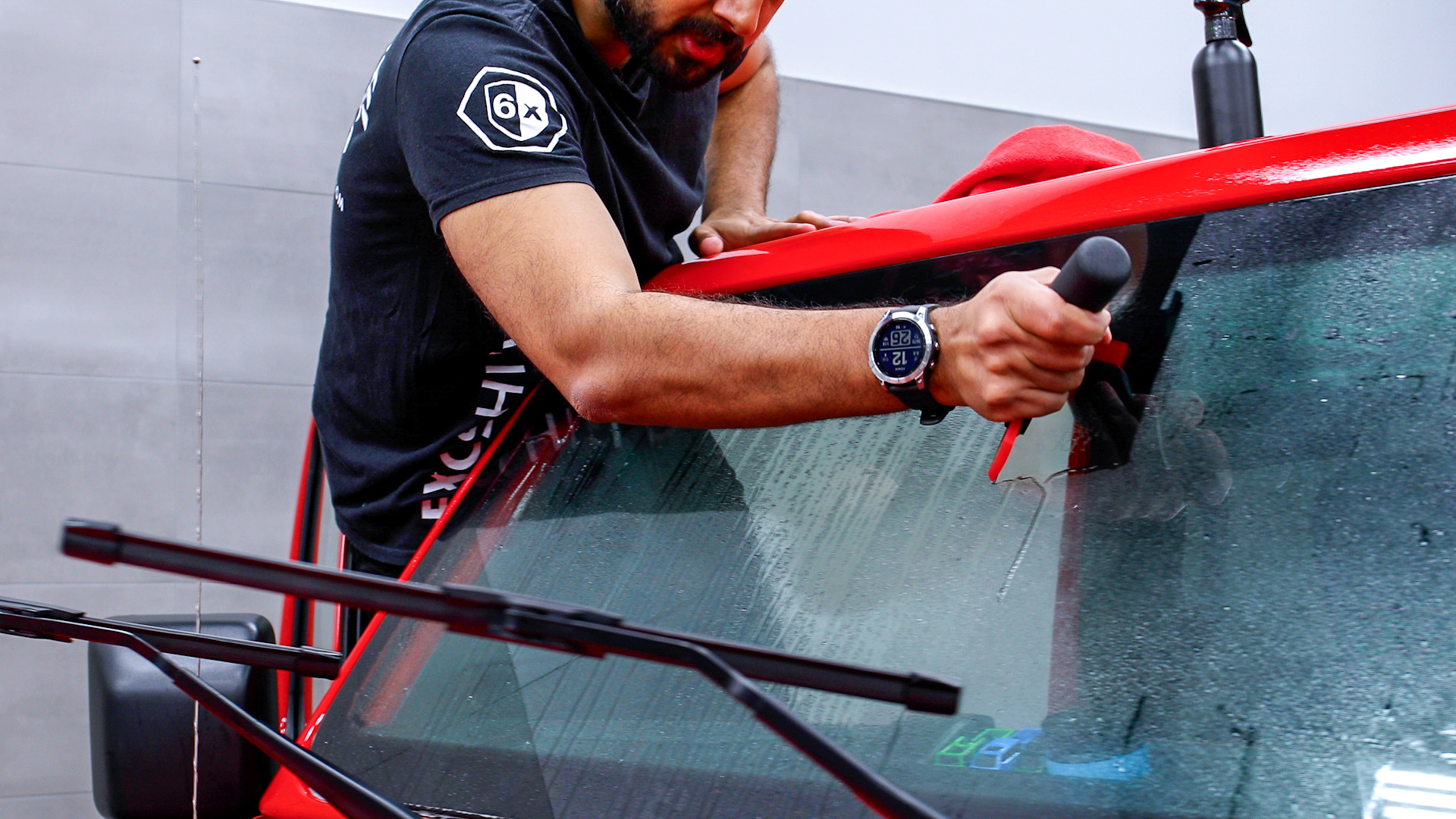
ExoShield Windshield Protection Film is designed to be low-maintenance, but it should be treated differently than bare glass for the best results. The goal is simple: keep the film clean, keep the wipers clean, and avoid harsh chemicals. ExoShield does not require special coatings or treatments to perform; the biggest factors that contribute to a long, clear protection experience are proper curing, gentle cleaning, and avoiding avoidable scratches. When properly cared for, products like ExoShield GT3+ and ExoShield ULTRA can easily last 3+ years, eclipsing our 3-year product warranty.
First 48 Hours After Installation
For the first 48 hours, avoid using your wiper blades and avoid driving in the rain when possible. ExoShield will continue curing for up to 14 days, depending on climate and storage conditions. Temporary water spots or slight distortion (waviness) during this curing period is normal and will clear as the film finishes curing.
For DIY ExoShield ULTRA kits, some extra moisture may be visible immediately after installation due to the thickness of the film. In most cases, that moisture evaporates over the following week. If moisture or clarity issues are still present after 2+ weeks, contact support (help@getexoshield.com).
Routine Cleaning Procedure
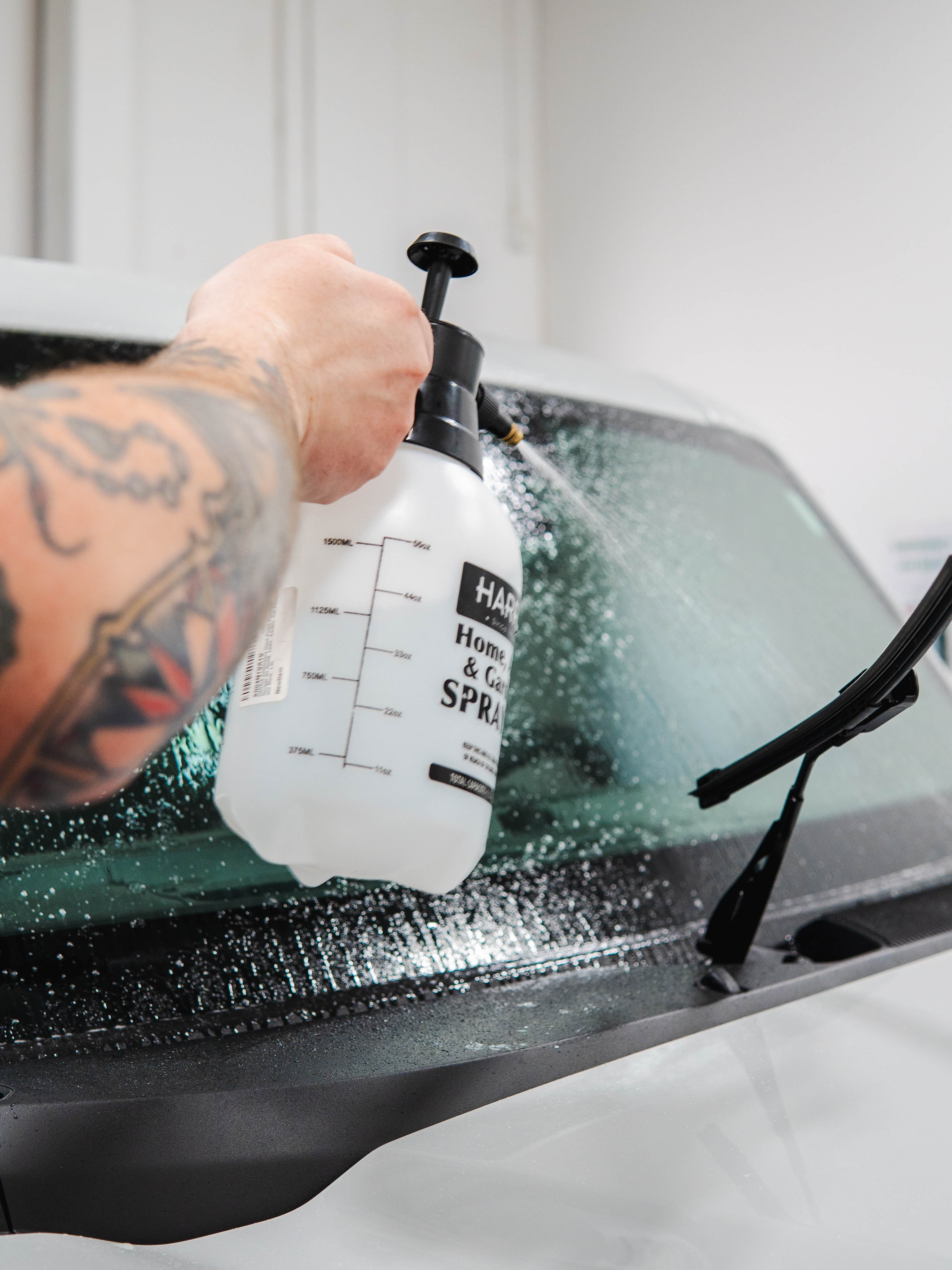
For regular maintenance:
- Rinse or pre-soak the windshield first to loosen dust, sand, bugs, and road grime.
- Hand wash gently using mild soap and water, or use a touchless car wash. ExoShield’s care guide specifically recommends gentle soap-and-water washing or touchless car washes.
- Use a clean microfiber towel or mitt. Do not scrub with anything rough or you run the risk of scratching the film.
- Dry with a clean microfiber towel using light pressure.
- Clean your wiper blades regularly with a damp microfiber cloth. ExoShield specifically calls out cleaning wiper blades to remove trapped grit that can scratch the film.
- Remove contaminants quickly, especially bugs, bird droppings, sap, oil, dirt, and chemicals. ExoShield ULTRA guidance specifically says to keep the surface free of bird droppings, dirt, oil, sap, and other chemicals whenever possible as they can etch the film just like they would to the paint if let sit for too long.
Recommended Maintenance Products
Use products that are gentle, non-abrasive, and film-safe:
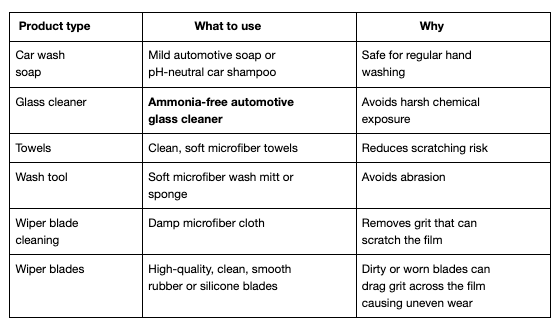
Examples of generally suitable cleaners would be Stoner Invisible Glass, Sprayway Ammonia-Free Glass Cleaner, or another clearly labeled ammonia-free automotive glass cleaner. Road & Track’s 2026 glass-cleaner testing also emphasizes automotive, ammonia-free cleaners and microfibre towel technique for reducing streaking.
What to Avoid
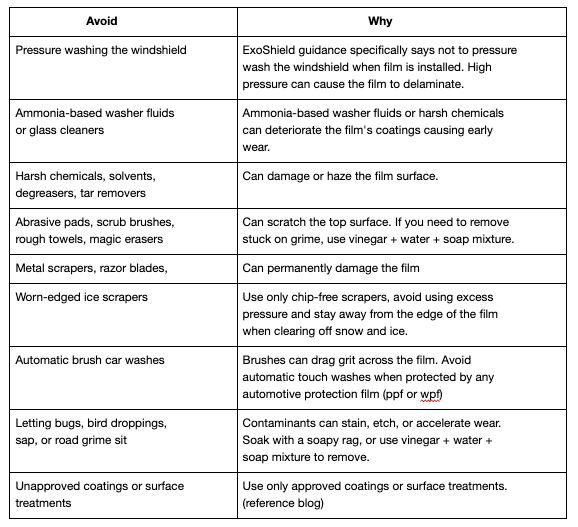
Avoid anything that can chemically attack, stain, lift, or scratch the film:
Wiper Blade Best Practices
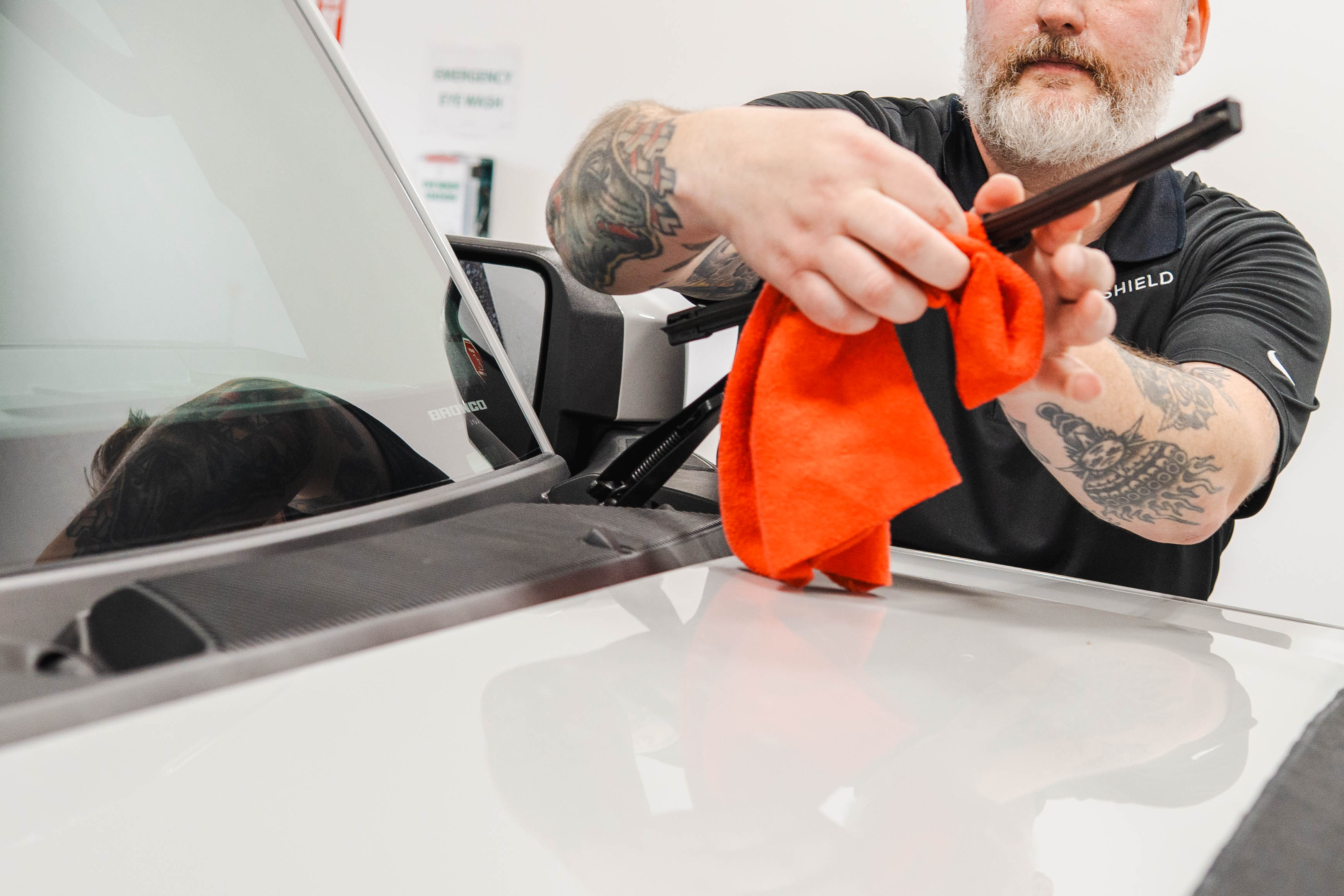
Wipers are one of the biggest day-to-day factors in film life. The film may be durable, but a dirty wiper blade can act like sandpaper if it drags grit across the surface.
Best practices:
- Wipe the rubber blade with a damp microfiber cloth every time you wash the vehicle.
- Replace blades when they chatter, streak, split, harden, or leave lines.
- Do not run wipers on a dry, dirty windshield.
- Use washer fluid only after the cure window, and avoid ammonia-based fluids.
- In winter, fully defrost or loosen ice before using the wipers.
Ice, Snow, and Winter Use

In cold climates, be extra careful. Do not chip at the film with a metal scraper or sharp ice tool. Use the vehicle’s defroster, allow ice to soften, and remove snow gently with a soft snow brush or a clean scraper. If scraping is necessary, use a plastic scraper carefully and avoid aggressive pressure at the film edges. If you have installed your windshield protection film in winter weather, try to keep your vehicle in a climate controlled environment for the first 24-48 hours after the install to keep from having frost form in the remaining moisture under the film.
Coatings, Rain Repellents, and Ceramic Products
Products like ExoShield ULTRA, or GT3+ do not need an added coating to work properly. If a customer wants to apply a rain repellent, ceramic coating, or glass treatment, the safe answer is: only use products approved for ExoShield windshield protection film. Check out our blog on approved ceramic coatings (here).
When to Contact an Installer or Support
Contact an ExoShield partner or support if:
- Moisture, haze, or distortion does not improve after the expected curing period.
- Edges begin lifting.
- The film is scratched enough to affect visibility.
- There is persistent haziness, contamination, or chemical damage.
- The customer (you) is unsure whether a cleaning chemical or coating is safe.
If severe scratching or haziness starts limiting visibility near the end of the film’s usable life, we recommend the film should be removed as soon as possible. Reach out to your installer, or another Certified ExoShield Partner about removal and replacement.
Unsure who to speak to about your concerns? Reach out to us directly at help@getexoshield.com.
If you own a shop and are interested in becoming an ExoShield partner follow this link to learn more!
Customer-Friendly Summary
Maintain ExoShield by treating it like a premium protective film, not bare glass. Let it cure for 48 hours, avoid wipers and water during that initial window when possible, wash gently with soap and water, use touchless car washes, clean your wiper blades often, and remove bugs, sap, oil, bird droppings, and road grime promptly. Avoid pressure washers, ammonia-based cleaners, harsh chemicals, rough towels, abrasive pads, metal scrapers, and unapproved coatings. Done properly, this helps preserve clarity, visibility, and performance for as long as possible.
Learn More About ExoShield Products
VIEW PRODUCTSLooking for the right installer for your automotive protection film? Click here for a map of certified installers.

Looking for a windshield protection film installer?
Check out our map to find our list of certified windshield protection film installers.
Visit MapFind us on Social Media:


